Table of Contents
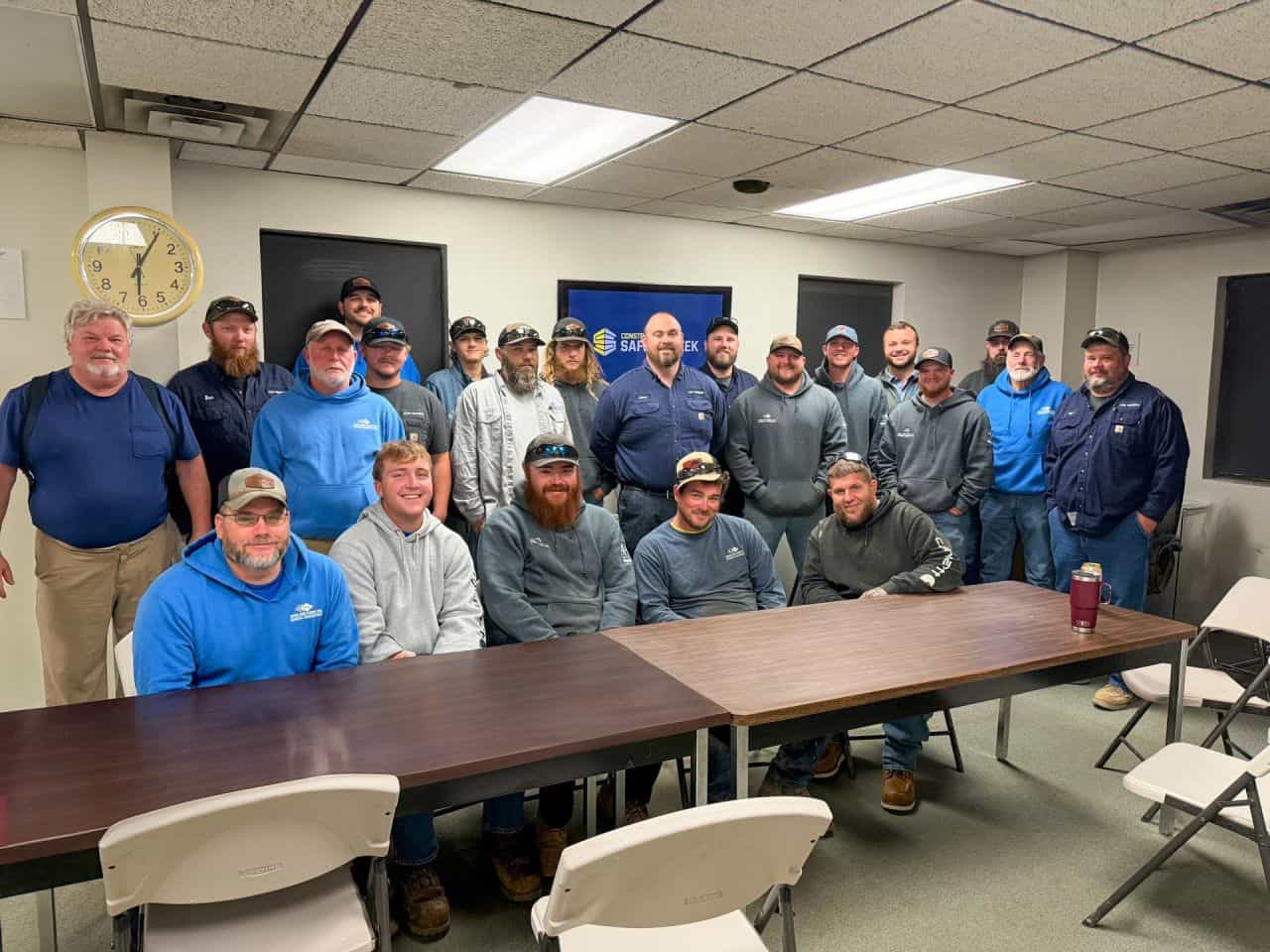
This week, the Doss & Horky team participated in Construction Safety Week, centered around this year’s theme: “All in Together.”
For a construction company rooted in Danville, Kentucky, and serving commercial, industrial, and utility clients across Central Kentucky, that message carries real weight. Safety is not just a checklist, a meeting, or a policy posted on the wall. It is a shared responsibility that shows up in the way a team prepares, communicates, works, and looks out for one another every day.
Construction Safety Week’s 2026 theme is built around three pillars: Recognize, Respond, and Respect. The national campaign describes these pillars as a unified call to action focused on high-energy, high-hazard work that can lead to serious injuries or fatalities if risks are not properly identified and controlled.
For companies working throughout communities like Danville, Boyle County, Lexington, Fayette County, and the surrounding Central Kentucky region, those three words are more than slogans. They are practical reminders of what it takes to keep people safe while building the facilities, infrastructure, utilities, and commercial spaces that help Kentucky communities grow.
Why Construction Safety Matters in Kentucky
Construction is one of the most important industries in Kentucky. From commercial development in Lexington to utility infrastructure in Boyle County and industrial projects throughout Central Kentucky, construction workers help build and maintain the places where people work, gather, and do business.
But construction also comes with real risks.
According to the U.S. Bureau of Labor Statistics, there were 5,070 fatal work injuries nationwide in 2024. In Kentucky alone, there were 70 fatal work injuries in 2024, with a fatal work injury rate of 3.7 fatalities per 100,000 full-time equivalent workers.
The same BLS report noted that transportation incidents were the most frequent type of fatal work event in Kentucky, accounting for 47% of all fatal work injuries in the state. Falls, slips, and trips accounted for 13% of Kentucky’s fatal workplace injuries.
Nonfatal injuries also remain a major concern. Private industry employers in Kentucky reported 34,100 nonfatal workplace injuries and illnesses in 2024, resulting in a total recordable case rate of 2.4 cases per 100 full-time equivalent workers. For Kentucky’s construction industry specifically, the total recordable case rate was 2.2.
These numbers make one thing clear: safety cannot be treated as an afterthought. It has to be part of the culture.
Recognize: Safety Starts Before the Work Begins
The first pillar of Construction Safety Week is Recognize.
On a job site, recognizing hazards means paying attention before work begins, while work is underway, and whenever site conditions change. It means identifying risks related to equipment, traffic, excavation, concrete work, utilities, fall hazards, weather, materials, and the many moving parts that exist on an active construction site.
This is especially important in commercial, industrial, and utility construction, where projects often involve heavy equipment, complex sequencing, subcontractor coordination, live utilities, site grading, confined spaces, electrical systems, and concrete installations.
Construction Safety Week points to research showing that workers may identify only 45% of the hazards they face during typical pre-task planning discussions, but that hazard recognition can improve significantly when teams use clearer tools and frameworks for identifying risk.
That is why communication matters so much. A safer job site begins with asking the right questions:
What work is happening today?
What has changed since yesterday?
Where are the highest-risk areas?
Who else is working nearby?
What equipment will be moving?
What controls need to be in place before the task begins?
For a Central Kentucky contractor, this kind of recognition protects more than the immediate crew. It protects clients, subcontractors, vendors, inspectors, visitors, and the surrounding community.
Respond: Awareness Must Lead to Action
Recognizing a hazard is only the first step. The next step is to Respond.
Responding means taking action before a risk becomes an incident. That may include stopping work, adjusting the plan, adding protective measures, improving communication, correcting unsafe conditions, or making sure the right people are involved before work continues.
Construction Safety Week emphasizes the importance of putting direct controls in place during the planning phase to help prevent serious injuries and fatalities.
In practical terms, responding can look like:
Checking that fall protection is in place before work at height begins.
Confirming excavation protections before entering a trench.
Creating clear equipment routes on a busy site.
Revisiting the plan when weather changes.
Making sure utility markings are understood before digging.
Stopping work when something does not look right.
The construction industry often refers to the “Focus Four” hazards: falls, electrocutions, struck-by incidents, and caught-in or caught-between incidents. CPWR, The Center for Construction Research and Training, notes that these four injury types together account for almost two-thirds of on-the-job fatalities among construction workers, with falls alone accounting for more than one-third of construction deaths on average.
National BLS data reinforces the seriousness of those hazards. In 2024, the construction industry recorded 1,034 fatal occupational injuries, including 389 involving falls, slips, and trips, 244 transportation incidents, 187 exposures to harmful substances or environments, and 161 contact incidents.
That is why a strong safety culture must empower people to act. It is not enough to notice a problem. A safe team responds before the problem becomes an injury.
Respect: Every Person Deserves to Go Home Safe
The third pillar is Respect.
Respect in construction safety means recognizing the value of every person on the job site. It means understanding that safety is not about slowing work down; it is about doing the work correctly, consistently, and responsibly.
A respectful safety culture encourages team members to speak up. It makes room for questions. It does not dismiss concerns because someone is new, younger, quieter, or less experienced. It treats safety as a shared standard, not a burden placed on one person or department.
For Doss & Horky, this aligns closely with the company’s role as a family-owned construction business with deep roots in Danville and Central Kentucky. The company has operated out of Danville for more than 40 years, serving industrial, utility, and commercial clients across the state, with work that includes factory builds, substations, utility infrastructure, and other complex projects.
That type of work requires trust. Clients need to trust that the job will be done right. Team members need to trust one another. Families need to trust that their loved ones will return home safely at the end of the day.
Respect is where safety becomes personal.
Building a Safer Construction Culture in Central Kentucky
From Danville to Lexington and throughout the surrounding Central Kentucky region, construction plays a major role in local growth. New commercial spaces, industrial facilities, utility systems, concrete work, excavation, renovations, and infrastructure projects all depend on skilled teams working together.
At Doss & Horky, safety is at the center of that work. It is built through consistency, communication, preparation, and shared responsibility.
Construction Safety Week is an important reminder, but the message cannot be limited to one week. The real goal is to carry that commitment into every project, every morning meeting, every site walk, every equipment check, and every decision made in the field.
“All in Together” is a fitting theme because safety does not belong to one person. It belongs to the entire team.
When crews recognize hazards early, respond with the right controls, and respect the people around them, they build more than strong projects. They build a stronger construction culture for Kentucky.
Doss & Horky is proud to stand alongside our team, our clients, our partners, and our industry in reinforcing a culture where safety remains the standard on every project.