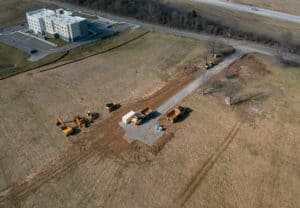
Land clearing is the removal of trees, brush, stumps, roots, rocks, and debris from a piece of land so it can be graded and built on. On a commercial or industrial project, it’s the first physical work on the site, and it sets up everything that follows: erosion control, grading, utilities, and the building pad.
Clearing a residential lot and clearing a 40-acre industrial site use some of the same machines, but the stakes are different. Commercial clearing runs under a stormwater permit, follows engineered clearing limits, has to protect streams and wetlands, and must leave soil that can support a building. This guide explains how land clearing works on commercial and industrial sites, the methods contractors use, the permits that apply, what happens to the debris, and the decisions that drive cost and schedule.
Land Clearing at a Glance
- What it is: removing vegetation, stumps, roots, and debris so a site can be graded and built on.
- Related terms: clearing (above ground), grubbing (stumps and roots), and stripping (topsoil).
- What comes first: a survey of clearing limits, permits, erosion controls, and utility locates.
- Main methods: mechanical clearing with dozers and excavators, forestry mulching, selective clearing, and hand clearing in sensitive areas.
- What drives cost: acreage, tree density, terrain, debris disposal, rock, and environmental limits.
Table of Contents

What Is Land Clearing?
Land clearing prepares raw or overgrown land for construction. On commercial and industrial projects, it’s the first step of site work, and it follows the limits and requirements in the civil drawings and specifications.
Project specifications often split the work into three parts:
- Clearing: cutting and removing trees, brush, shrubs, fallen logs, fences, and surface debris inside the clearing limits.
- Grubbing: removing stumps, roots, and buried organic material below the surface. Specs usually set a depth below finished grade that grubbing has to reach.
- Stripping: removing the topsoil layer, which is full of organic material, and stockpiling it for reuse in landscaped areas.
The phrase “clearing and grubbing” shows up in nearly every civil spec and bid form because both parts are needed before grading. Clearing alone leaves stumps and roots in the ground. As they rot, they leave voids that can settle under a slab, a road, or a foundation.
On redevelopment sites, the work can also include demolishing old structures, breaking out pavement, and removing abandoned foundations and utilities. That work usually falls under a separate demolition scope.
Commercial vs. Residential Land Clearing
Most search results on this topic are aimed at homeowners clearing a lot or a pasture. Commercial and industrial work differs in a few important ways:
- Engineered limits. Clearing limits come from the civil drawings, and crews stay inside them. Trees outside the limits are often protected.
- Permits. Most commercial sites disturb an acre or more and need construction stormwater coverage before clearing starts.
- Soil requirements. The cleared ground has to support compacted fill, pavement, and buildings, so grubbing and stripping are done to the specification.
- Scale and schedule. Clearing is the first activity on the schedule, and every other trade waits for it.
- Documentation. Inspections, stormwater records, and sometimes tree surveys are part of the job.
Before Land Clearing Starts
The work before the first tree comes down often decides whether the job goes smoothly.
Survey and mark the clearing limits
A surveyor stakes the property lines, the clearing limits, and any areas to protect, such as tree preservation zones, stream buffers, and wetlands. Crews mark these with fencing or flagging so equipment operators can see them.
Get the permits in place
Several permits can apply on a commercial site:
- Construction stormwater. Sites that disturb one acre or more generally need coverage under a construction stormwater permit before clearing, with a stormwater pollution prevention plan. The EPA’s construction stormwater page explains the federal program. In Kentucky, the Energy and Environment Cabinet’s Division of Water runs the program under the Kentucky Pollutant Discharge Elimination System (KPDES).
- Streams and wetlands. Placing fill or clearing in a way that discharges material into streams or wetlands can require a permit under Section 404 of the Clean Water Act, issued by the U.S. Army Corps of Engineers.
- Local approvals. Grading permits, tree ordinances, and site plan approvals vary by city and county.
Check for protected species and resources
Some sites have trees that serve as habitat for protected species. In Kentucky, federally listed bats roost in trees, and projects with a federal permit or federal funding may have seasonal limits on when trees can be cut. Cultural and historic resources can also affect where clearing can happen. These reviews happen during design, before clearing is scheduled.
Locate utilities
Clearing equipment, and especially grubbing, disturbs the ground. Calling 811 and locating private utilities before work starts protects buried gas, power, water, and communication lines. Overhead power lines also matter: felling trees and operating tall equipment near them takes planning.
Land Clearing Methods
The right method depends on the site, the vegetation, what happens to the debris, and how much ground disturbance is acceptable.
Mechanical clearing
Most commercial clearing is mechanical. Dozers push over and pile brush and small trees. Excavators with thumbs pick up logs, pull stumps, and sort debris. Larger trees are felled with chainsaws or a feller buncher, then moved by skidders or loaders. Mechanical clearing is fast on large sites and handles stumps and roots in the same pass.
Forestry mulching
A forestry mulcher grinds standing trees and brush into mulch and leaves it on the ground. It works well for clearing underbrush, right-of-way corridors, and areas that will stay unpaved. Mulching alone doesn’t remove stumps and roots, so building and pavement areas still need grubbing.
Selective clearing
Selective clearing removes some vegetation and keeps the rest, such as mature trees, buffers along property lines, or vegetation along streams. It takes more care and time but can save trees the owner wants and meet local landscape requirements.
Hand clearing
Chainsaw crews and hand tools are used in places machines shouldn’t go: steep slopes, stream buffers, around protected trees, and near structures or overhead lines.
The Land Clearing Process: 8 Steps
Most commercial sites follow the same sequence.
1. Install erosion and sediment controls
Silt fence, a stone construction entrance, inlet protection, and other controls go in before soil is disturbed. The stormwater plan shows where each one goes.
2. Establish access and staging
Crews build a construction entrance and haul routes, and set aside areas for equipment, log decks, and debris piles. Staging areas stay inside the disturbed footprint.
3. Fell and remove trees
Trees are cut and moved to a log deck or processing area. Marketable timber can be sold to a mill, which offsets part of the cost on heavily wooded sites.

4. Clear brush and undergrowth
Brush, small trees, and vines are cleared and piled for processing. On some sites, this step happens first, so crews can reach the larger trees.
5. Grub stumps and roots
Excavators pull stumps and rake out roots to the depth the specification calls for. Holes left by stumps are filled and compacted later during grading.
6. Strip and stockpile topsoil
Topsoil is stripped from building, pavement, and fill areas and stockpiled for reuse in landscaping. Stockpiles get their own erosion protection.
7. Process and dispose of debris
Debris is ground, mulched, hauled off, or burned where allowed. Disposal is covered in the next section.
8. Stabilize and hand off to grading
Disturbed areas that won’t be graded right away are seeded or mulched to limit erosion. The cleared site then goes to the grading crew. Our guide to site development covers grading, utilities, and the building pad that come next.
What Happens to Land Clearing Debris
Debris handling is one of the biggest variables in cost and schedule. Common options include:
- Grinding or mulching on site. A tub or horizontal grinder turns brush and stumps into mulch that can be used for erosion control or landscaping, or hauled away.
- Selling timber. Logs of marketable size and species go to a sawmill or a pulpwood buyer.
- Hauling off. Debris goes to a landfill, a yard waste facility, or a recycler. Haul distance and tipping fees drive this cost.
- Burying. Burying stumps on site is generally a poor choice on building sites because buried wood rots and settles. Many specifications prohibit it in structural areas.
- Open burning. Burning can be the cheapest option but is the most regulated. In Kentucky, open burning of clearing debris falls under state air quality rules, and state forestry law limits burning near woodland during the spring and fall fire hazard seasons (February 15 to April 30 and October 1 to December 15), when burning within 150 feet of woodland or brushland is allowed only between 6 p.m. and 6 a.m. Local fire departments and county ordinances can add more limits. Check with the Kentucky Division for Air Quality and the local fire department before planning to burn.
Safety During Land Clearing
Clearing work involves heavy equipment, falling trees, chainsaws, and uneven ground. OSHA has a section specific to it. 29 CFR 1926.604 requires employers to:
- Protect workers from irritant and toxic plants, such as poison ivy, and instruct them in the first aid available.
- Equip all site clearing equipment with rollover guards.
- Fit rider-operated equipment with an overhead and rear canopy guard. The overhead cover must be at least 1/8-inch steel plate or 1/4-inch woven wire mesh with openings no larger than 1 inch, or equivalent.
Earthmoving equipment also falls under 29 CFR 1926.602, which covers seat belts, brakes, backup alarms, and related requirements. Grubbing that becomes an excavation falls under the excavation rules in 29 CFR 1926.651. Other common hazards include struck-by injuries from falling trees and limbs, chainsaw kickback, contact with overhead power lines, and equipment rollovers on slopes.

What Drives the Cost of Land Clearing
Owners search for land clearing cost per acre more than almost anything else on this topic. On commercial sites, though, per-acre prices from another project rarely transfer, because the work varies so much. The main cost drivers are:
- Acreage and density. A lightly wooded field costs far less per acre than mature hardwood forest.
- Tree size. Large trees take more time to fell, move, and process, and their stumps take longer to grub.
- Terrain and access. Steep slopes, wet ground, and limited access slow equipment.
- Debris disposal. Grinding, hauling distance, tipping fees, and burning restrictions often decide the total.
- Grubbing depth and stripping. Deeper grubbing and thicker topsoil add time and material to move.
- Rock. Central Kentucky’s shallow limestone can turn up as soon as the topsoil comes off.
- Environmental limits. Stream buffers, seasonal tree-cutting windows, and protected areas add planning and slow the work.
- Timber value. Marketable timber can offset part of the cost.
What Owners Should Plan For
A few early decisions make commercial clearing faster and cheaper:
- Clear only what the project needs. Every extra acre cleared adds cost and erosion control.
- Decide what to save. Mark trees and buffers to protect before the clearing contractor bids.
- Settle debris disposal early. Know whether burning is allowed and where the nearest grinding or disposal option is.
- Get the permits first. Clearing before stormwater coverage is in place can bring penalties and stop work.
- Check the timing. Seasonal limits on tree removal, wet seasons, and burn seasons can move the start date.
- Plan for rock and soft ground. A geotechnical report before bidding shows where rock and unsuitable soil sit.
- Keep the topsoil. Stockpiled topsoil saves buying it back for landscaping at the end.
Land Clearing for Utility and Substation Sites
Utility projects bring their own clearing work. New substations start with clearing the footprint, the access road, and room for erosion controls and staging. Transmission and distribution lines need cleared rights-of-way, and work near existing energized lines needs extra planning. Our guides to site preparation for substations and substation construction explain how the clearing fits into the larger project.
How Doss and Horky Approaches Site Work
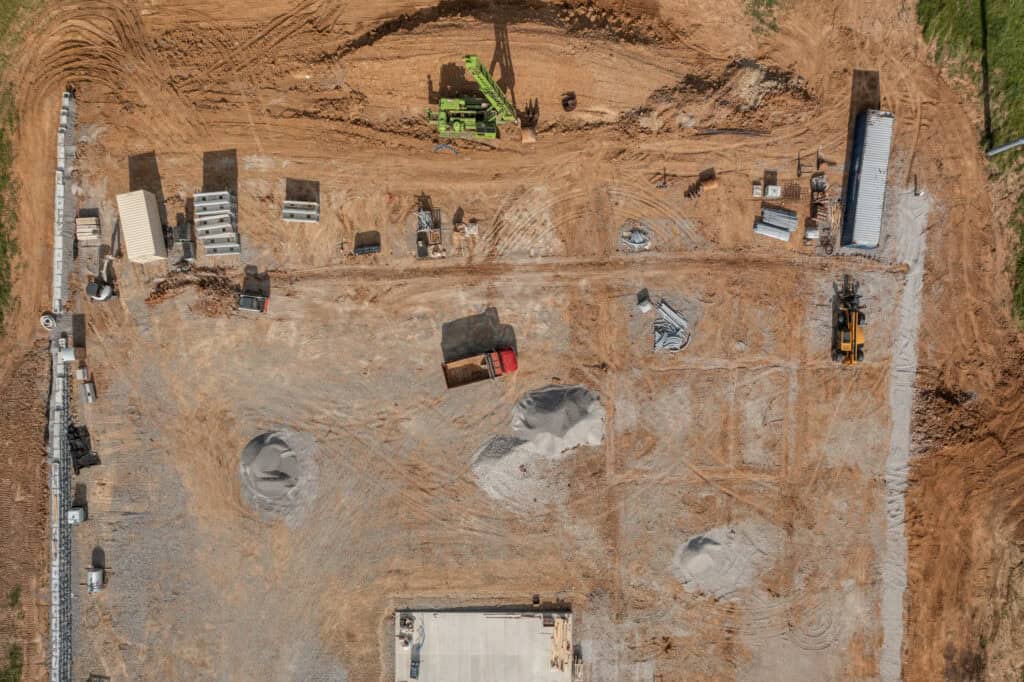
Doss and Horky has done site development across Central Kentucky since 1985, including mass grading, excavation, erosion control, and infrastructure installation for commercial, industrial, and utility projects. The General Contracting and Utility divisions handle site work as one team, from the first erosion controls through the building pad.
Land Clearing FAQ
What is land clearing?
Land clearing is the removal of trees, brush, stumps, roots, rocks, and debris from land so it can be graded and built on. On commercial projects, it usually includes clearing, grubbing, and topsoil stripping to the limits in the civil drawings.
What is the difference between clearing and grubbing?
Clearing removes trees, brush, and debris above the ground. Grubbing removes stumps, roots, and buried organic material below the surface. Both are needed before grading, because buried wood rots and causes settlement.
Do I need a permit for land clearing in Kentucky?
Most commercial sites that disturb one acre or more need construction stormwater permit coverage before clearing starts, and work affecting streams or wetlands can need a Clean Water Act Section 404 permit. Local grading permits and tree ordinances may also apply.
Can you burn clearing debris in Kentucky?
Sometimes, but it’s regulated. State air quality rules govern open burning, and during the spring and fall fire hazard seasons, burning within 150 feet of woodland or brushland is allowed only between 6 p.m. and 6 a.m. Check with the Kentucky Division for Air Quality and the local fire department first.
How much does commercial land clearing cost?
It depends on acreage, tree density and size, terrain, debris disposal, grubbing depth, rock, and environmental limits. Per-acre prices from other projects rarely transfer, so get a quote based on your site’s survey and civil drawings.
How long does clearing a commercial site take?
Duration depends on acreage, vegetation, equipment, weather, and how debris is handled. Permits and seasonal tree-cutting limits often affect the start date more than the clearing itself.
What is forestry mulching?
Forestry mulching uses a machine that grinds standing trees and brush into mulch and leaves it on the ground. It’s useful for underbrush and rights-of-way, but building and pavement areas still need stumps and roots grubbed out.
What happens after land clearing?
After clearing, grubbing, and stripping, the site moves to grading. Crews cut and fill to design elevations, install underground utilities and stormwater systems, and build the pad for the building, roads, and parking.
Planning Land Clearing for a Commercial Site?
Land clearing is the first work on a new site, and the choices made here affect grading, utilities, and the building that follow. If you’re planning a commercial, industrial, or utility project in Kentucky, talk with Doss and Horky’s General Contracting team early, while clearing limits, debris handling, and sequencing can still be shaped around your site. Read our guide to site development, or call 859-236-2690.
_This article is general information, not engineering or legal advice. Permit, burning, and environmental requirements vary by site; confirm them with the agencies and the project’s engineer of record._