

OSHA 10 and OSHA 30 are safety training courses from OSHA’s Outreach Training Program. The 10-hour course is built for entry-level workers, and the 30-hour course is built for supervisors and anyone with responsibility for safety on a job site.
Both end with a wallet card from the U.S. Department of Labor, and both show up in job postings, bid documents, and site orientation checklists. The OSHA 10 vs OSHA 30 question comes up for new hires picking a course, foremen moving into supervision, and owners deciding what to require of contractors. This guide covers what each course teaches, who needs which, how long each takes, and what a card does and doesn’t prove.
OSHA 10 vs OSHA 30 at a Glance
- OSHA 10: about 10 hours of hazard-awareness training for workers. Covers OSHA basics and the four hazards that cause most construction deaths.
- OSHA 30: about 30 hours for supervisors, foremen, superintendents, and safety staff. Covers the same ground in more depth, plus managing safety on a site.
- Neither is a certification. The card shows a person completed the course. It doesn’t qualify anyone for specific tasks like operating a crane or erecting scaffold.
- Neither is required by federal OSHA rules, but some states, many owners, and many contractors require one or the other.
Table of Contents
What Are OSHA 10 and OSHA 30?
The Outreach Training Program is OSHA’s voluntary program for teaching workers about job site hazards and their rights. OSHA doesn’t teach the classes itself. It authorizes trainers, who teach in person or through OSHA-authorized online providers, and the cards are issued through those trainers’ authorizing organizations.
The program runs separate tracks for construction and general industry, plus smaller tracks for maritime and disaster site work. Construction and general industry each offer a 10-hour and a 30-hour course. When a contractor or job posting asks for “OSHA 10” or “OSHA 30” on a construction job, they mean the construction version.
The point of both courses is hazard recognition. A worker who has taken OSHA 10 should be able to spot an unprotected trench, an ungrounded cord, or a missing guardrail and know it’s a problem. A supervisor with OSHA 30 should be able to spot the same hazards, understand the rules behind them, and organize the work so the crew isn’t exposed in the first place.
OSHA 10 vs OSHA 30 Side by Side
| OSHA 10 (Construction) | OSHA 30 (Construction) | |
|---|---|---|
| Intended for | Entry-level and field workers | Supervisors, foremen, superintendents, safety staff |
| Length | 10 hours of instruction | 30 hours of instruction |
| Minimum time to finish | 2 days (7.5-hour daily limit) | 4 days (7.5-hour daily limit) |
| Focus | Recognizing and avoiding common hazards | Recognizing hazards, plus planning and managing safety |
| Core topics | Intro to OSHA, Focus Four hazards, PPE, health hazards | Same core topics in more depth, plus safety management and more electives |
| Card | Department of Labor 10-hour card | Department of Labor 30-hour card |
| Federal expiration | None | None |
The biggest practical difference in the OSHA 10 vs OSHA 30 comparison is who the course is written for. OSHA 10 teaches a worker to protect themselves. OSHA 30 teaches a supervisor to protect a crew.
What the OSHA 10 Construction Course Covers
Start the OSHA 10 vs OSHA 30 comparison with the shorter course. Every OSHA 10 construction class covers a required core, then the trainer adds elective topics that fit the audience. The core includes:
- Introduction to OSHA. Workers’ rights, employer responsibilities, how to file a complaint, and what an inspection looks like.
- The Focus Four. Falls, caught-in or caught-between hazards (including trench cave-ins), struck-by hazards, and electrocution. These four cause most construction worker deaths, so they get the most time.
- Personal protective equipment. Hard hats, eye and face protection, hearing protection, high-visibility clothing, and fall protection gear.
- Health hazards. Noise, silica dust, hazardous chemicals, and other exposures that cause illness over time.
Electives might cover scaffolds, stairways and ladders, cranes and rigging, excavations, materials handling, or tools. A good trainer picks electives that match the work the class actually does. A utility crew and an interior finish crew need different examples.
What the OSHA 30 Construction Course Adds
This is where OSHA 10 vs OSHA 30 differ most. OSHA 30 covers the same core with more time per topic and a supervisor’s point of view. Where OSHA 10 teaches a worker to recognize a fall hazard, OSHA 30 spends time on how fall protection is planned, what the rules require, and how a supervisor checks that systems are installed correctly.
In OSHA 10 vs OSHA 30 terms, the 30-hour course also adds material on managing safety and health. That includes running a safety program, job hazard analysis, inspections, incident investigation, and how to talk to a crew about safety in a way that changes behavior.
It also includes more electives. Supervisors usually get deeper coverage of excavations, scaffolds, cranes, concrete and masonry, steel erection, and confined spaces, because those are the high-hazard activities a superintendent has to plan around.
Do you need OSHA 10 before OSHA 30?
No. The OSHA 30 course doesn’t require OSHA 10 first. A new supervisor can go straight into the 30-hour course. Many people take OSHA 10 early in their career and OSHA 30 later when they move into a lead role, but that order is a habit. No rule requires it.
Who Needs Which Card
The OSHA 10 vs OSHA 30 decision usually follows the person’s role. Here’s how it typically lines up on commercial, industrial, and utility projects.
Laborers, apprentices, and new hires. OSHA 10 is the usual expectation. It gives a new worker a common vocabulary for hazards before they start learning the trade.
Skilled tradespeople and equipment operators. OSHA 10 is common. Experienced operators, finishers, and carpenters who lead small groups or train newer workers often take OSHA 30 as well.
Foremen and crew leads. OSHA 30 is the better fit. A foreman decides how work gets set up each morning, which makes them the first line of hazard control.
Superintendents and project managers. OSHA 30. They plan sequencing, logistics, and protective systems, and they coordinate multiple trades on a shared site.
Safety managers. OSHA 30 is a starting point. Most safety professionals go on to more advanced training and professional credentials.
Owners’ representatives and facility staff. OSHA 10 or OSHA 30 helps people who walk construction sites often, even when they don’t direct the work. It helps them recognize when something on a contractor’s site isn’t right.
When the OSHA 10 vs OSHA 30 choice isn’t clear for a role, ask the employer or check the contract. If you’re between roles, OSHA 30 covers everything OSHA 10 does.
OSHA 10 vs OSHA 30: Construction or General Industry?
Pick the track that matches the work. The construction courses follow OSHA’s construction standards in 29 CFR Part 1926. The general industry courses follow Part 1910, which covers manufacturing, warehousing, health care, and most fixed workplaces.
Someone who works on a contractor’s crew building a plant takes construction. Someone who works inside that plant after it opens, running production or maintenance, usually takes general industry. Maintenance staff who do construction-type work, such as renovations or new equipment foundations, sometimes take both.
When a contract or posting says only “OSHA 10 vs OSHA 30” without a track, ask. On a construction job site, the construction card is almost always the one that counts.
Is an OSHA 10 or OSHA 30 Card Required?
Under federal OSHA rules, neither card is required. That surprises people who see OSHA 10 vs OSHA 30 requirements in nearly every construction job posting. The Outreach Training Program is voluntary. What federal law does require is training. OSHA’s construction rule 29 CFR 1926.21 requires every employer to instruct each employee in recognizing and avoiding unsafe conditions and in the regulations that apply to their work.
An OSHA 10 or OSHA 30 course is one common way to cover part of that duty. Employers still owe workers training specific to their tasks and site.
State requirements
Several states have made the cards mandatory for some or all construction work. Nevada, for example, requires OSHA 10 for construction workers and OSHA 30 for supervisors. New York requires OSHA 10 for workers on public work projects above a set contract value. Other states require the cards on public or state-funded projects. Rules change, so check the current law in the state where the work is.
Kentucky
Kentucky runs its own OSHA-approved state plan through the Kentucky Labor Cabinet, which enforces job site safety rules for most employers in the state. Kentucky does not have a statewide law requiring OSHA 10 or OSHA 30 cards for private construction work. On Kentucky job sites, the OSHA 10 vs OSHA 30 requirement usually comes from the project owner, the general contractor, or the contract documents.
Owner and contractor requirements
That’s where most card requirements actually live. Utilities, manufacturers, hospitals, school districts, and other owners often write OSHA 10 for all workers and OSHA 30 for supervisors into their contractor safety requirements. General contractors often pass the same rule down to every subcontractor. A worker who shows up without the required card may not get through site orientation.
What an OSHA Card Doesn’t Cover
Whichever way the OSHA 10 vs OSHA 30 decision goes, the card shows awareness training. Many OSHA rules require separate, task-specific training that no outreach course replaces. A few examples from the construction standards:
- Fall protection. 29 CFR 1926.503 requires training by a competent person for every worker who might be exposed to fall hazards, with a written certification record and retraining when a worker’s understanding falls short.
- Scaffolds. 29 CFR 1926.454 requires training for workers who use scaffolds and for those who erect, move, or take them down.
- Cranes. 29 CFR 1926.1427 sets its own operator training, certification, and evaluation requirements.
- Excavations. 29 CFR 1926.651 requires daily trench inspections by a competent person, someone who can identify hazards and has authority to correct them right away.
So an employer can’t treat a stack of OSHA 30 cards as a finished training program. The cards are a baseline. Task training, site orientation, and daily hazard reviews do the rest.
How to Get an OSHA 10 or OSHA 30 Card
The steps are the same on both sides of the OSHA 10 vs OSHA 30 choice.
- Choose the track. Construction or general industry, matched to the work.
- Find an authorized trainer or provider. Classes are taught in person by OSHA-authorized outreach trainers, or online through OSHA-authorized online providers. Many employers, unions, community colleges, and trade associations host classes.
- Plan the time. Outreach courses are limited to 7.5 hours of instruction per day. OSHA 10 takes at least two days and OSHA 30 at least four. Online courses have to be finished within six months of starting.
- Complete the course and any assessments. The trainer or provider confirms completion.
- Get the card. Students usually get a printable completion record right away. The trainer is responsible for providing the Department of Labor card within 90 days of the class.
Be careful with providers that promise a card without real course time. A legitimate course takes the full hours. Employers can ask to see the card itself, and many owners check cards at orientation.
How much does OSHA 10 or OSHA 30 cost?
Prices vary by provider, format, and class size, and online courses are often cheaper than classroom courses. On cost, OSHA 10 vs OSHA 30 mostly tracks course length, so the 30-hour course costs more. Employers frequently pay for the training, especially when the card is a condition of working on their sites. Ask an employer before paying out of pocket.
Does an OSHA 10 or OSHA 30 Card Expire?
The answer is the same for both cards in the OSHA 10 vs OSHA 30 comparison. Under the federal program, the cards don’t expire. In practice, though, many owners, contractors, and states expect a refresher. Nevada, for example, requires workers to renew their training every five years, and some owners ask for a card dated within the last five years.
Replacement cards are also limited. A lost card can usually be replaced only if the course was taken within the last five years. After that, the person generally has to take the course again. Keeping a photo or copy of the card saves trouble later.
OSHA 10 vs OSHA 30 and Your Construction Career
For most people, OSHA 10 vs OSHA 30 works as a sequence. For someone entering the trades, OSHA 10 is a practical first credential. It shows an employer you understand the basic hazards before your first day, and it’s a requirement on many commercial, industrial, and utility sites. It’s also short enough to finish before a start date.
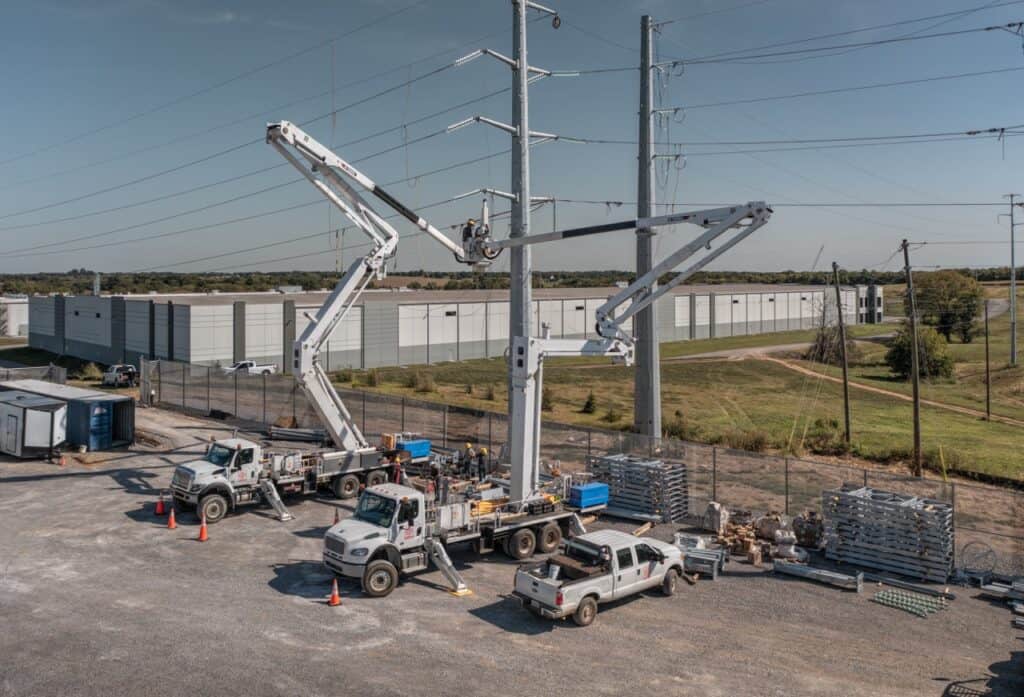
OSHA 30 matters when you’re ready to lead. Moving from laborer or operator to foreman means taking responsibility for other people’s safety, and OSHA 30 is the course built for that step. Many people take it when they’re first asked to run a crew, and some take it earlier to show they’re ready.
Neither side of OSHA 10 vs OSHA 30 replaces experience. The workers who move up fastest combine training with good habits on site: speaking up about hazards, setting up work the right way, and helping newer workers do the same.
Writing OSHA 10 vs OSHA 30 Requirements Into a Contract
Owners and project managers who set OSHA 10 vs OSHA 30 requirements should be specific. A clear requirement is easier to enforce and less likely to cause disputes at orientation.
- Name the track. Construction or general industry.
- Name the roles. OSHA 10 for all field workers and OSHA 30 for supervisors is a common split. Define “supervisor” so everyone reads it the same way.
- Set an age limit if you want one. For example, a card dated within the last five years.
- Say how cards are checked. At orientation, before badging, or through a list the contractor submits.
- Keep task training separate. Require the specific training the OSHA rules call for, such as fall protection, scaffold, and crane operator qualifications, in addition to the cards.
- Apply it to subcontractors. State that the requirement flows down to every tier.
The Associated General Contractors of America, of which Doss and Horky is a member, publishes safety and health resources that many contractors use when building their own programs.
How Doss and Horky Approaches Safety Training
Doss and Horky builds substations, utility infrastructure, industrial plants, distilleries, and commercial buildings across Central Kentucky. Every one of those job sites involves the hazards the OSHA 10 vs OSHA 30 courses cover: open trenches, work at height, heavy equipment, energized electrical systems, and concrete work. Training is part of how the team keeps people safe on that work, and the company took part in Construction Safety Week’s 2026 “All in Together” campaign.
OSHA 10 vs OSHA 30 FAQ
What is the main difference between OSHA 10 and OSHA 30?
OSHA 10 is a 10-hour hazard awareness course for entry-level workers. OSHA 30 is a 30-hour course for supervisors and workers with safety responsibility. Both cover the same core hazards, but OSHA 30 goes deeper and adds material on planning and managing safety on a site.
Which is better, OSHA 10 or OSHA 30?
Neither is better in general. In the OSHA 10 vs OSHA 30 choice, the right card depends on your role. Field workers usually need OSHA 10. Foremen, superintendents, project managers, and safety staff usually need OSHA 30.
How long does it take to get an OSHA 30 card?
The course has 30 hours of instruction, and training is limited to 7.5 hours a day, so it takes at least four days. Online courses must be completed within six months of starting. The physical card arrives later, and trainers are responsible for providing it within 90 days.
Does an OSHA 10 card expire?
Not under the federal program, and that’s true on both sides of OSHA 10 vs OSHA 30. Some states, owners, and employers require refresher training, often every five years, so check the requirements for the sites where you work.
Can I take OSHA 30 without OSHA 10?
Yes. OSHA 10 is not a prerequisite for OSHA 30. Many people take OSHA 10 first and OSHA 30 later in their career, but you can go straight to OSHA 30.
Is an OSHA card a certification?
No. The card shows you completed an Outreach Training Program course. It doesn’t certify you to perform specific tasks. Separate training is still required for things like fall protection, scaffolds, and crane operation.
Is OSHA 10 required in Kentucky?
Kentucky doesn’t have a statewide law requiring OSHA 10 or OSHA 30 for private construction work. Many owners and general contractors in Kentucky require the cards in their contracts and site rules, so most construction workers in the state will be asked for one.
Building a Career Where Safety Comes First
If you’re looking for construction work in Central Kentucky, see the current openings on Doss and Horky’s careers page, including equipment operator, concrete laborer, skilled tradesman, and site superintendent roles. Owners planning a project can learn more about how the team works through the Utility Division and the General Contracting Division, or read about the company’s Construction Safety Week participation. Call 859-236-2690 with questions.
_This article is general information, not legal advice. Training requirements change and vary by state, owner, and contract, so confirm the rules that apply to your project._
