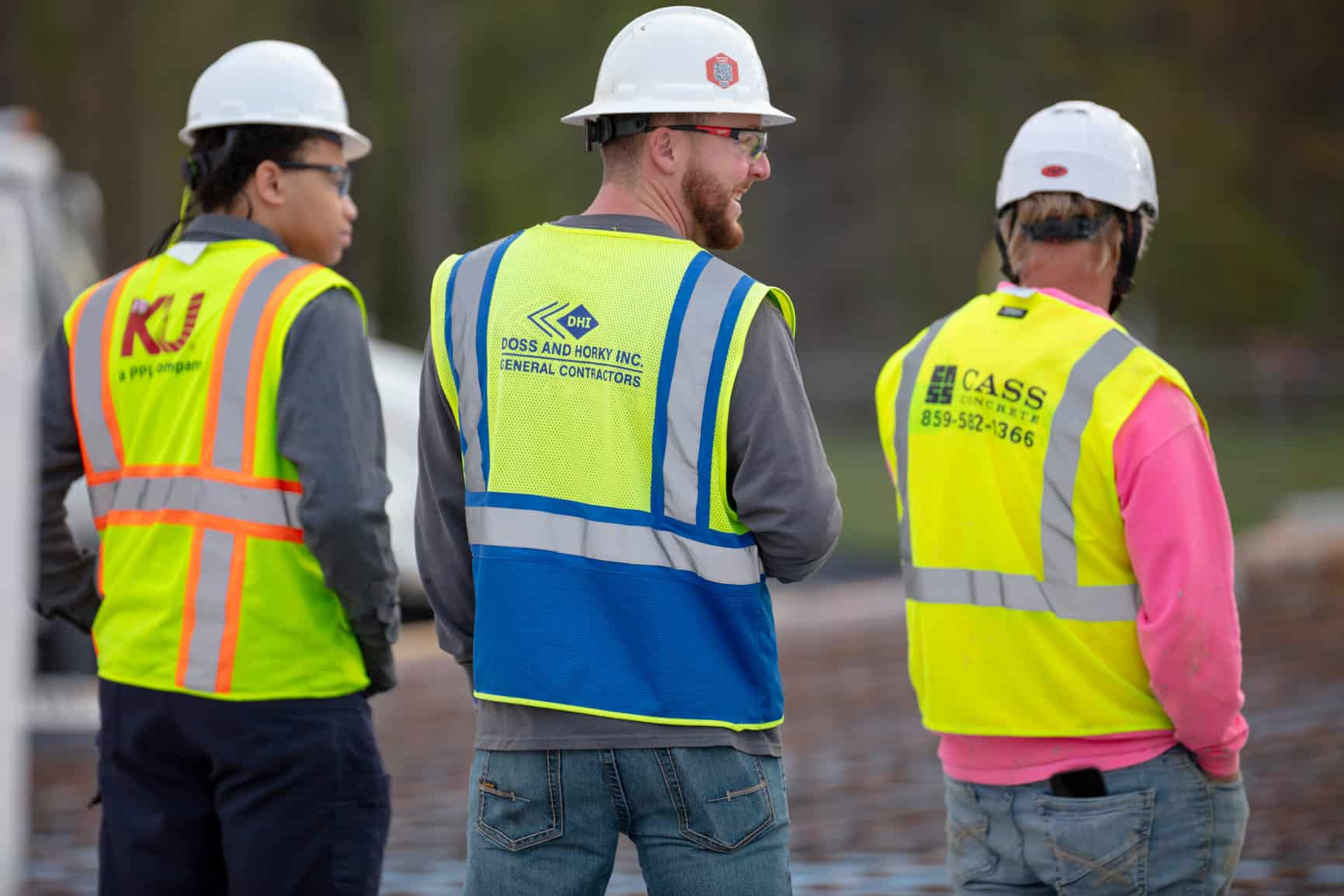
A general contractor is the company that holds the construction contract with the owner and is responsible for delivering the whole building: the schedule, the cost, the quality, the safety of everyone on site, and the work of every trade. So what does a general contractor do day to day? It plans the job, hires and coordinates the subcontractors, performs some of the work with its own crews, manages the money and the paperwork, and hands the owner a finished, inspected building.
On a house, that role can look like one builder and a few trades. On a plant expansion, a warehouse, or a municipal building, it is a team of project managers, superintendents, and field crews coordinating dozens of companies over months. This guide answers the question “what does a general contractor do?” for commercial and industrial projects, phase by phase, so owners, facility managers, and project engineers know what to expect and what to ask for.
What Does a General Contractor Do? Key Points at a Glance
- Holds the contract: the general contractor (GC) signs with the owner and answers for the whole scope, including work it subcontracts.
- Plans the job: estimates, schedules, constructability reviews, and bid packages before anyone breaks ground.
- Builds the team: hires and manages subcontractors and suppliers, and often self-performs core work such as concrete or site work.
- Runs the site: daily supervision, safety, quality control, inspections, and coordination between trades.
- Manages cost and paperwork: pay applications, change orders, submittals, and requests for information.
- Closes out: punch list, final inspections, warranties, and the documents the owner needs to operate the building.
Table of Contents
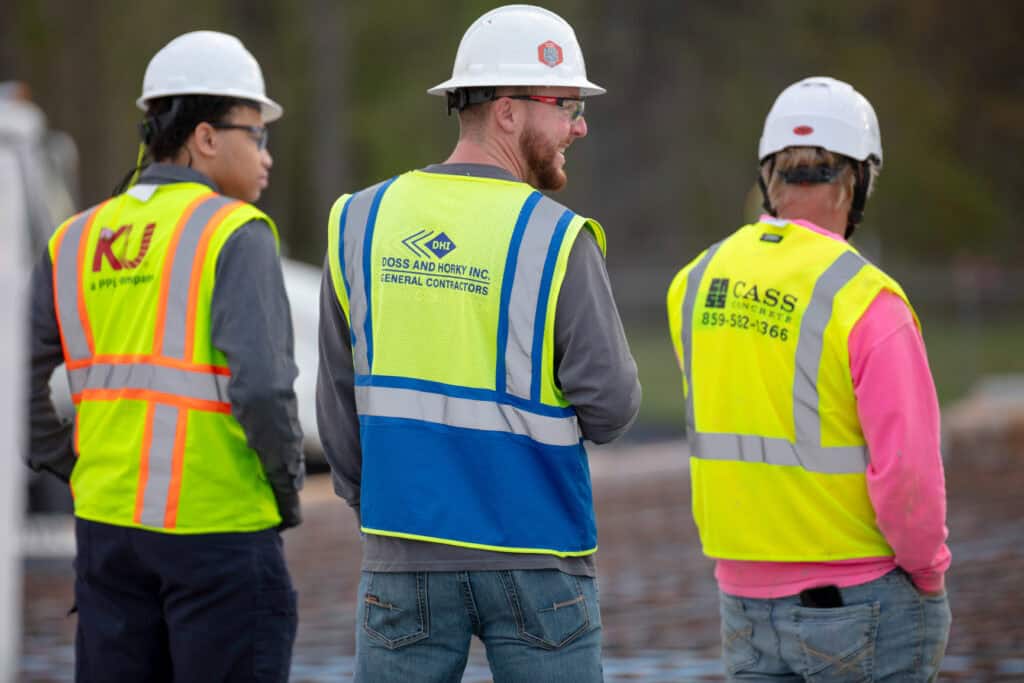
What Does a General Contractor Do? The Four Core Responsibilities
A general contractor takes a set of drawings and specifications and turns them into a finished building, on an agreed schedule and budget. The GC is the single point of responsibility for construction. When something goes wrong between the plumber and the steel erector, the GC sorts it out so the owner doesn’t have to.
That responsibility has four parts:
- Coordination. Sequencing every trade so the right work happens in the right order, in the right place, without crews stacking on top of each other.
- Control. Tracking cost, schedule, and quality against the contract, and raising problems early.
- Safety. Running a jobsite safety program that covers the GC’s own crews and every subcontractor.
- Accountability. Standing behind the finished work through closeout and the warranty period.
What Does a General Contractor Do That a Subcontractor Doesn’t?
A subcontractor is a specialty company hired by the general contractor to perform one part of the work, such as electrical, mechanical, roofing, or structural steel. The subcontractor’s contract is with the GC, not the owner.
That structure keeps the owner’s life simple. One contract, one schedule, one company to call. The GC writes the subcontracts, sets the scope of each one so nothing falls through the gaps, and pays the subcontractors as their work is completed and accepted.
Most commercial general contractors also self-perform some trades with their own employees. Concrete, site work, and carpentry are common. Self-performing core work gives the GC direct control over the activities that drive the schedule, rather than waiting on a third party.
What Does a General Contractor Do Before Construction Starts?
Preconstruction is where a general contractor adds the most value for the least money. Changes on paper are cheap. Changes in the field are not.
Estimating and budgeting
The GC prices the project from the drawings: quantities of concrete, steel, and earthwork; labor hours; equipment; and quotes from subcontractors and suppliers. On early-stage projects, the GC may produce budget estimates at several points as the design develops, so the owner can make decisions before the design is locked.
Constructability review
Experienced builders read drawings differently than designers do. A constructability review looks for details that will be hard or slow to build, conflicts between disciplines (a duct running through a beam, for example), and missing information that will turn into questions later. Finding those issues before bidding saves change orders during construction.
Value engineering
Value engineering means looking for ways to deliver the same function for less cost or time. Examples include a different wall system, a revised foundation approach based on the soil report, or a material with a shorter lead time. Good value engineering keeps what the owner actually needs and removes cost that doesn’t serve it.
Schedule and logistics
The GC builds the master schedule: when the site work starts, when the building is dried in, when equipment arrives, and when inspections happen. It also plans site logistics, including where trucks enter, where materials are stored, where cranes set up, and how the job stays separate from any operating facility next door.
Permits and approvals
The design team typically prepares the drawings that go to the building department, and the GC usually pulls the building permit and schedules inspections. Responsibilities vary by contract, so the contract should say who handles each permit.
What Does a General Contractor Do During Procurement?
Once the GC has the contract, it “buys out” the job. That means awarding subcontracts and purchase orders for every part of the scope.
Bid packages. The GC divides the work into packages (site utilities, structural steel, roofing, electrical, and so on) and writes a clear scope for each one. Gaps and overlaps between packages are a common source of disputes, so this step deserves care.
Subcontractor selection. Price matters, but so do safety records, financial strength, current workload, and past performance. A low bid from a subcontractor who can’t staff the job costs more in the end.
Submittals. Before materials are ordered, subcontractors submit shop drawings, product data, and samples. The GC reviews them for completeness and routes them to the architect or engineer for approval.
Long-lead items. Switchgear, transformers, structural steel, specialty doors, and process equipment can take months to arrive. The GC identifies these early and orders them as soon as approvals allow, because a late transformer can hold up an entire building.
What Does a General Contractor Do on the Jobsite?
What does a general contractor do once crews mobilize? Its job is to keep work moving safely, in the right sequence, and to the standard the drawings require.

Supervision
A superintendent runs the site every day. The superintendent sequences the trades, holds coordination meetings, checks that work matches the drawings, and keeps a daily log of crews, weather, deliveries, inspections, and problems. A project manager handles the contract side: cost, schedule updates, subcontracts, and communication with the owner and design team.
Coordination between trades
Most field problems come from two trades needing the same space at the same time. The GC sorts that out before it happens. Underground utilities go in before the slab. Overhead mechanical, electrical, and fire protection are coordinated so they don’t collide in the ceiling. Inspections are scheduled before work gets covered up.
Quality control
The GC checks work as it’s installed, not just at the end. That includes reviewing layout, witnessing third-party tests (soil compaction, concrete strength, welding), and tracking deficiencies until they’re fixed. On industrial floors, for example, that can mean confirming the slab meets its flatness specification before racking goes in. Our article on slab on grade construction covers that example in detail.
RFIs and change orders
When the drawings are unclear or conflict with field conditions, the GC submits a request for information (RFI) to the design team and waits for an answer before proceeding. When the scope changes, whether from owner requests, unforeseen conditions, or design revisions, the GC prices the change and proceeds only with a signed change order. A disciplined change process protects both the owner’s budget and the schedule.
Communication with the owner
Owners should expect regular progress meetings, an updated schedule, and honest reports on risks. Good GCs bring problems forward early, along with options for solving them.
What Does a General Contractor Do About Safety?
Construction sites are dangerous, and the general contractor sets the safety standard for everyone on them.
Federal rules are clear on where responsibility sits. OSHA’s construction standard, 29 CFR 1926.16, says the prime contractor is never relieved of overall responsibility for compliance on the work under its contract, and that the prime contractor and its subcontractors share joint responsibility for subcontracted work. A separate rule, 29 CFR 1926.20, requires employers to run accident prevention programs that include frequent and regular inspections of job sites, materials, and equipment by competent persons.
In practice, a general contractor’s safety program usually includes:
- Site-specific safety plans and orientation for every worker who comes on site.
- Daily or task-level hazard reviews before high-risk work such as excavation, lifting, or work at height.
- Regular site inspections and documented corrections.
- Requirements in every subcontract for training, protective equipment, and reporting.
- Coordination with the owner’s own safety rules on an operating plant, utility site, or school campus.
How General Contractors Get Paid
Commercial construction usually runs on monthly progress payments. The GC submits a pay application showing how much of each line item is complete; many owners use the American Institute of Architects (AIA) G702 and G703 forms for this. The architect or owner’s representative reviews it against the work in place, and the owner pays the approved amount.
Most contracts hold back retainage, a percentage of each payment (often 5 to 10 percent), until the project reaches substantial completion or closeout. Retainage gives the owner leverage to get the punch list finished.
How the GC’s own costs and fee are calculated depends on the contract type:
| Contract type | How the price works | Where it fits |
|---|---|---|
| Lump sum (stipulated sum) | One fixed price for the defined scope | Complete designs, competitive bidding |
| Cost plus a fee | Owner pays actual costs plus an agreed fee | Fast-moving or uncertain scopes |
| Guaranteed maximum price (GMP) | Cost plus fee, capped at a ceiling | Construction management at risk and some design-build work |
| Unit price | Price per measured unit (cubic yard, linear foot) | Earthwork, utilities, and repetitive work |
What Does a General Contractor Do at Closeout?
The last few percent of a project takes real effort. At closeout, the general contractor:
- Walks the punch list. The owner and designer list incomplete or deficient items, and the GC tracks each one to completion.
- Coordinates final inspections with the building department, fire marshal, and any other authority, so the owner can receive a certificate of occupancy.
- Supports commissioning. Mechanical, electrical, and life-safety systems are tested to confirm they work as designed.
- Delivers closeout documents: as-built drawings, operation and maintenance manuals, warranties, and attic stock of spare materials.
- Trains the owner’s staff on new systems and equipment, as the contract requires.
- Answers warranty calls during the warranty period, usually one year for workmanship unless the contract says otherwise.
What Does a General Contractor Do in Each Delivery Method?
The GC’s role changes with the project delivery method the owner chooses. Here is the short version.
Design-bid-build. The owner hires a designer, completes the drawings, and then bids the work to general contractors. The GC enters after design and builds to the documents. This is the traditional model.
Design-build. The owner signs one contract with a single entity for both design and construction. The general contractor often leads that team and hires the designer. The Design-Build Institute of America publishes guidance on this method.
Construction management at risk (CMAR). The contractor joins during design, provides preconstruction services, and then builds the project under a guaranteed maximum price.
A construction manager acting as an agent advises the owner but doesn’t hold the trade contracts. A general contractor does. We compare the three main methods in detail in Design-Build vs. Design-Bid-Build vs. CM at Risk.
What Does a General Contractor Do on Industrial and Utility Projects?
Industrial and utility work asks more of a general contractor than a typical commercial building. A few differences owners should plan for:
Working next to operations. Plant expansions and utility projects often happen beside running production lines or energized equipment. The GC has to plan shutdowns, tie-ins, access routes, and dust and noise control around the owner’s operation, and follow the owner’s permit-to-work and safety rules.
Heavy foundations and concrete. Process equipment, cranes, and tanks need engineered foundations, embeds, and anchor bolts set to tight tolerances. Errors here are expensive to fix after the equipment arrives.
Site development. Industrial buildings often start on raw or underused land that needs grading, utilities, stormwater controls, and access roads before the building can start.
Strict documentation. Utilities, distilleries, and manufacturers often require detailed quality records, material certifications, and inspection reports for their own compliance.
Licensing and Qualifications in Kentucky
Kentucky licenses certain trades at the state level, including electrical, plumbing, and HVAC work, through the Department of Housing, Buildings and Construction. The state does not issue a general contractor license, but some cities and counties require local registration or licensing, and public owners set their own prequalification rules.
Beyond licensing, owners usually check a general contractor’s insurance, bonding capacity, safety program, financial strength, and record on similar projects. Membership in industry groups such as the Associated General Contractors of America also signals a commitment to industry standards. Our guide to the qualities of a good contractor goes through the selection checklist in detail.
What Does a General Contractor Do at Doss and Horky?
Doss and Horky has served as a general contractor in Central Kentucky since 1985. Our General Contracting Division builds industrial plants, commercial buildings, distilleries, municipal facilities, and warehouses, and offers design-build, competitive-bid general contracting, and construction management.
Our crews self-perform concrete work (formwork, pumping, placement, and finishing) and site development, including grading, excavation, erosion control, and infrastructure installation. For the other trades, we partner with skilled subcontractors around the state and manage them as one team. That matches how we describe the company: One Team. One Standard.
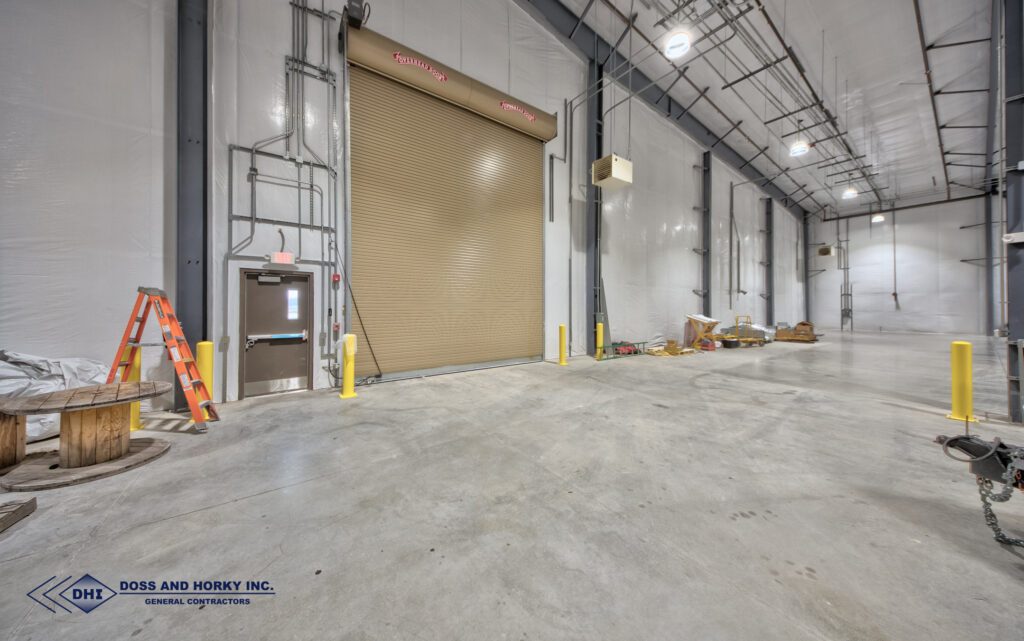
A recent example is the LG&E-KU warehouse and guard shack in Louisville, where Doss and Horky serves as general contractor. The scope covers site preparation, structural steel erection, mechanical systems, and security infrastructure, along with grading, utility installation, and an access road. Other builds include the Baker 300 Aviation hangar, an 11,600-square-foot private hangar with offices, a maintenance area, and a conference room, and the Wilderness Trail tasting room and fermentation expansion.

General Contractor FAQ
What does a general contractor do?
A general contractor holds the construction contract with the owner and is responsible for building the project as designed, on schedule and on budget. The GC plans the work, hires and coordinates subcontractors, self-performs some trades, runs jobsite safety and quality control, manages payments and changes, and closes out the project.
What does a general contractor do that a subcontractor doesn’t?
A subcontractor performs one trade under contract with the GC. The general contractor coordinates all the trades, holds the contract with the owner, manages the overall schedule and budget, and carries overall responsibility for safety and for the finished work.
What does a general contractor do with its own crews?
Most commercial general contractors self-perform some trades with their own crews, commonly concrete, site work, or carpentry. The rest is subcontracted to specialty firms that the GC manages.
What does a general contractor do during preconstruction?
During preconstruction, the GC estimates cost, reviews the drawings for constructability, suggests value engineering options, builds the schedule, plans site logistics, and prepares bid packages for subcontractors. This is the cheapest point to solve problems.
What does a general contractor do to keep a site safe?
The general contractor sets the site-wide safety program: orientation, hazard reviews before high-risk work, regular inspections, and safety requirements in every subcontract. Every employer is still responsible for its own workers. Under OSHA’s 29 CFR 1926.16, the prime contractor keeps overall responsibility for compliance on its contract and shares joint responsibility with subcontractors for their work.
What does a general contractor do on a warehouse or plant project?
On a warehouse or plant, the GC typically manages site development, foundations and the floor slab, steel erection, the building envelope, and the mechanical, electrical, and process trades. It also coordinates owner-furnished equipment and plans the work around any operation running next door.
What is the difference between a general contractor and a construction manager?
A general contractor holds the trade contracts and is responsible for delivering the work, usually after design is complete. A construction manager may join during design to advise on cost and schedule. Under CM at risk, the construction manager also holds the trade contracts and guarantees a maximum price; as an agent, it advises the owner without holding them.
How do general contractors get paid on commercial projects?
Usually through monthly pay applications based on the percentage of work complete, often on AIA G702 and G703 forms. Owners commonly hold back retainage until substantial completion. The total price depends on the contract type: lump sum, cost plus fee, guaranteed maximum price, or unit price.
Planning a Commercial or Industrial Project in Kentucky?
The earlier a general contractor joins a project, the more it can shape the budget, the schedule, and the risks. If you’re planning a plant expansion, warehouse, distillery, or municipal building, talk with Doss and Horky’s General Contracting Division about your project, or call 859-236-2690.
_This article is general information, not legal or contract advice. Contract terms, licensing, and safety obligations vary by project and jurisdiction._